
Recent Press

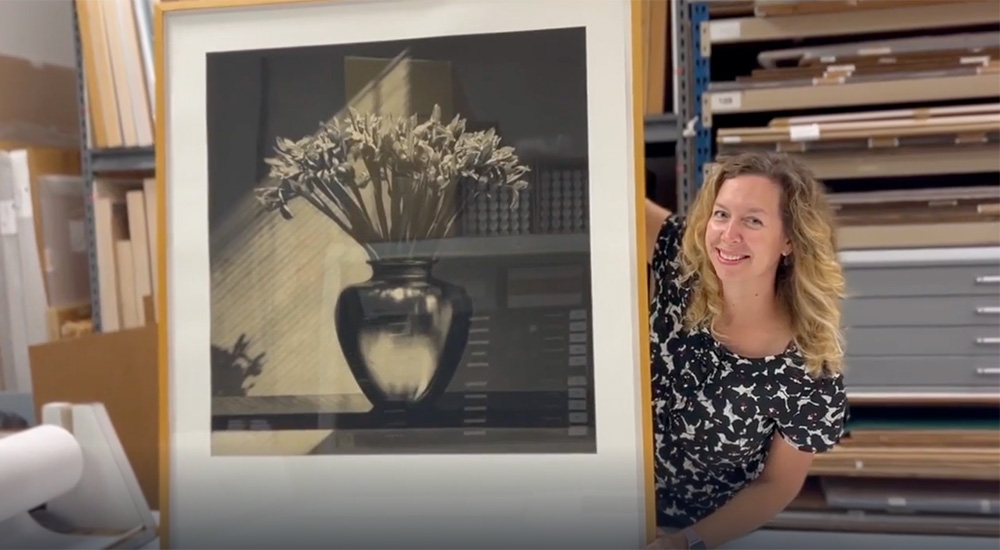
2/8/2024 - Outstanding Robert Rauschenberg Exhibit at USF
- Tony Wong Palms, Creative Pinellas
Read More >

1/15/24 - Spring exhibition at USF Tampa campus highlights printmaking pioneers – Jennifer Ring, CLTampa.com
Read More >

10/20/2023 - Graphicstudio at USF Tampa is the preferred printmaking shop of legendary artists - Sean Daly, ABC Action News, WFTS-Tampa
Watch Now >

4/26/2023 - How Tampa’s Graphicstudio became the printmaking matrix for 20th-century art legends - Auction Central News
Read More >

4/16/2023 - At USF, a hidden gem of a print studio - By Pegie Stark, Tampa Bay Times
Read More >
Visit the Newsroom for more stories!
About Graphicstudio
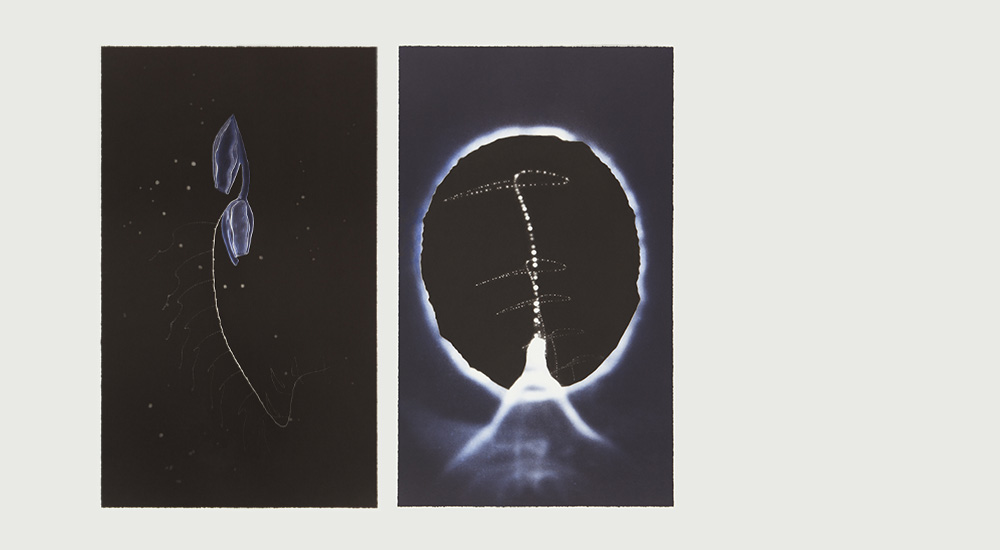
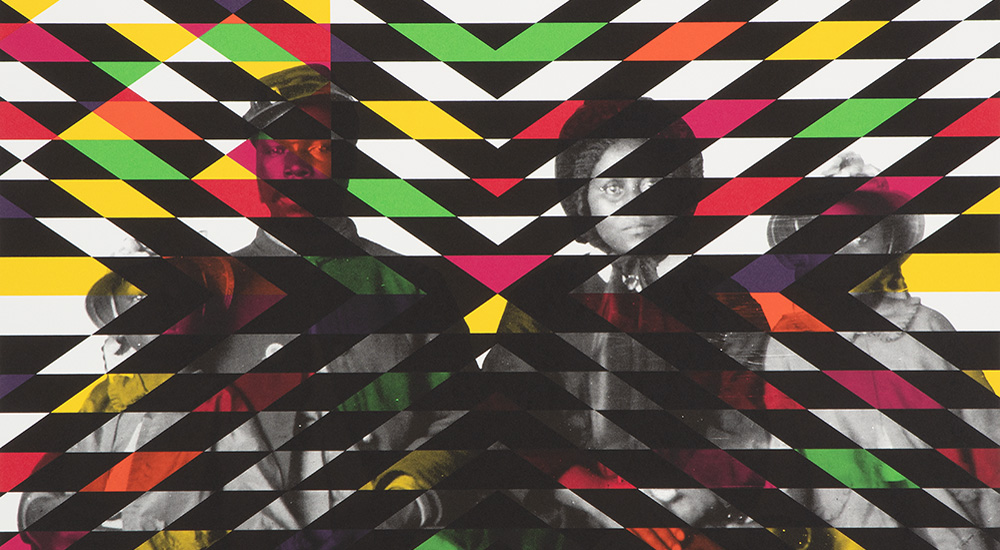
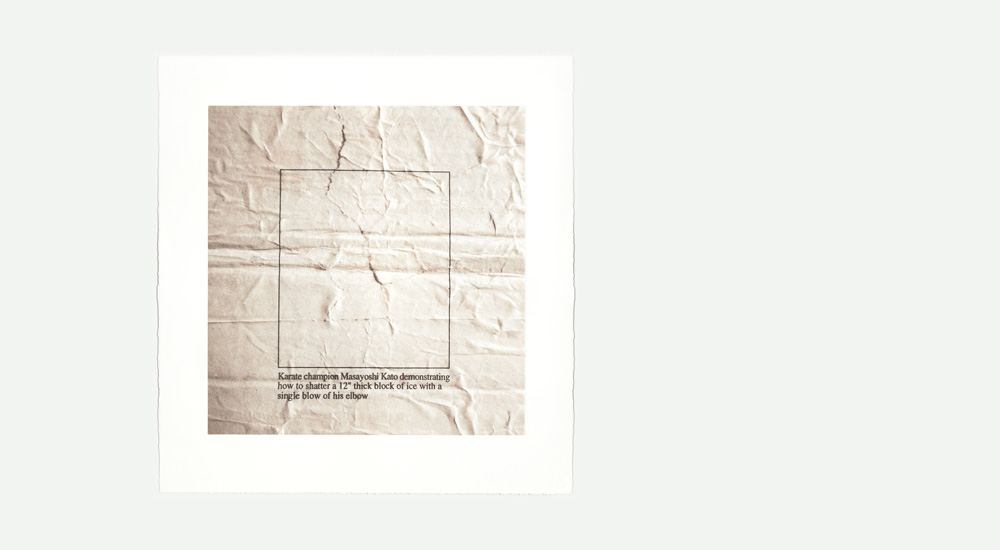
Since its inception, the studio has invited over 100 emerging and established contemporary artists from around the world who have worked in a range of styles and media to produce more than 1,000 limited edition print and sculpture multiples. Impressions of Graphicstudio editions have been acquired by leading museums and corporate and private collections worldwide. In 1990, the National Gallery of Art in Washington D.C. established an archive of the editions that resulted in a major exhibition with an accompanying catalogue documenting the history of Graphicstudio. In 2014, the Tampa Museum of Art presented a major survey exhibition also accompanied by a significant publication that focused on works produced in the last two decades.
Graphicstudio practices traditional printmaking techniques including intaglio, lithography, silkscreen, and relief along with photogravure, cyanotype and pigment prints. Sculpture multiples are produced in a range of media including bronze, steel, aluminum, wood, rubber, and less traditional materials including lava (basalt) and pigmented resins.
Graphicstudio is a member of the International Fine Print Dealers Association.
Mission
Graphicstudio was founded in 1968 as an experiment in art and education at the University of South Florida, Tampa. At Graphicstudio, research into art-making techniques works in tandem with new aesthetic expressions by leading and emerging artists. The constant push by collaborating artists and studio staff to create new possibilities for artistic practice is the backbone of the atelier, and the impetus that has kept it at the forefront of international fine art publishing.
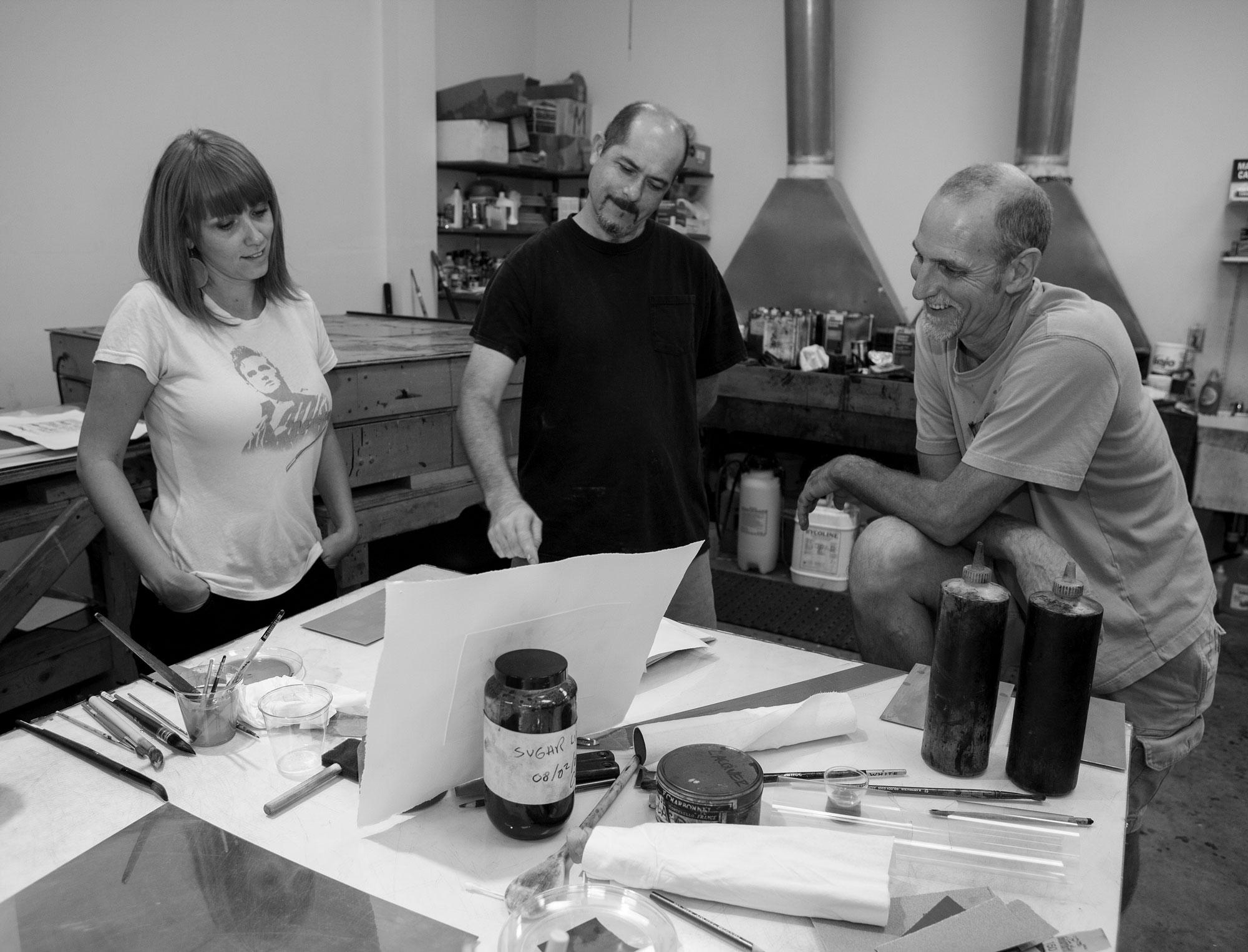
Robyn O'Neil working with master printers Tim Baker (middle) and Tom Pruitt (right).
History
Graphicstudio was founded by Dr. Donald J. Saff as part of the renaissance in American printmaking in the 1960s, in the company of studios such as ULAE, Tamarind, and Gemini GEL. This renaissance brought artists involved in the Pop art movement, such as Robert Rauschenberg, James Rosenquist, and Jim Dine, together with a growing number of trained printmakers, and with an American public desiring to collect affordable art.
One of the first artists to work at Graphicstudio was Robert Rauschenberg, whose energy perfectly fit the philosophy and practice of the new workshop. The artist, along with a dedicated group of faculty, staff and students, avidly experimented with forms and techniques—photo transfer, cyanotype, sepia prints, printing on cloth and ceramics, sculptures with new materials, a hundred-foot-long photograph—and ultimately completed over sixty editions. The studio’s reputation as a place where faculty and staff will eagerly pursue and collaborate with the artist’s every idea and inspiration was established in those early days, and this innovative environment continues to be a major factor in its continuing success.
About the Institute for Research in Art
The USF Institute for Research in Art (IRA) is the umbrella organization for Graphicstudio, the Contemporary Art Museum, and the Public Art program. Part of the University of South Florida College of The Arts, the IRA is dedicated to an international artists’ residency program that brings today’s most accomplished and influential artists working in the international art arena to the university and Tampa Bay community. IRA’s exhibitions, collection development, publication of limited edition graphics and sculpture multiples, commissioned public art works, lectures, symposia, workshops and special events are designed to foster awareness about the role of contemporary artists in shaping our culture and society. Participating artists represent a diverse spectrum of contemporary art practice including, but not limited to, painting, sculpture, photography, electronic media, and performance.
About the University of South Florida
The University of South Florida, a high-impact research university dedicated to student success and committed to community engagement, generates an annual economic impact of more than $6 billion. With campuses in Tampa, St. Petersburg and Sarasota-Manatee, USF serves approximately 50,000 students who represent nearly 150 different countries. U.S. News & World Report has ranked USF as one of the nation’s top 50 public universities for five consecutive years, and this year USF earned its highest ranking ever among all universities public or private. In 2023, USF became the first public university in Florida in nearly 40 years to be invited to join the Association of American Universities, a prestigious group of the leading universities in the United States and Canada. Through hundreds of millions of dollars in research activity each year and as one of the top universities in the world for securing new patents, USF is a leader in solving global problems and improving lives. USF is a member of the American Athletic Conference. Learn more at www.usf.edu.
Upcoming Events
2/21/25
X Factor: Latinx Artists and the Reconquest of the Everyday Artists Conversation + Dessert Reception
5/10/25
Graphicstudio Open House + Benefit Sale
Donate!
Subscribe
Follow us on
Sales
For sales, or more information about an edition, please contact Graphicstudio at
(813) 974-3503 or gsoffice@usf.edu.
Visitor Information
Graphicstudio Hours:
Graphicstudio is open to visitors by appointment. Please contact gsoffice@usf.edu or (813) 974-3503.
Internships
Interested in an internship at CAM or Graphicstudio? Visit our Internships page to find out how to apply and what deadlines you need to know.
Printmaking + Sculpture Terms
Online Partners





Copyright + Reproduction
Images of the artwork are jointly owned by the artist and Graphicstudio. Reproduction of any kind including electronic media must be expressly approved by Graphicstudio.
Contact
gsoffice@usf.edu
(813) 974-3503
If you have any questions about Graphicstudio or a work of art you see on this site please email us at gsoffice@usf.edu.